Saturday, February 25, 2012

Dead Space 2

Resident Evil has met its match, Dead Space 2 is outstanding
Review By DC47
It comes as no surprise that a follow up to the very successful and well done Dead Space was put into motion almost immediately after the first games release. Dead Space 2 picks up some years after the first game left us. The general survival horror game play has remained untouched, but plenty of other changes have been made, mostly for the better. Visceral Games, with this release, has shown that they truly read all the fan mail, both praising their work and constructive criticism of it. With this new installment, I would say that Resident Evil has now met its match. Please note that this review is based on the SINGLE PLAYER ONLY. I have not played the multi-player at all, and I'm not planning to anytime soon.
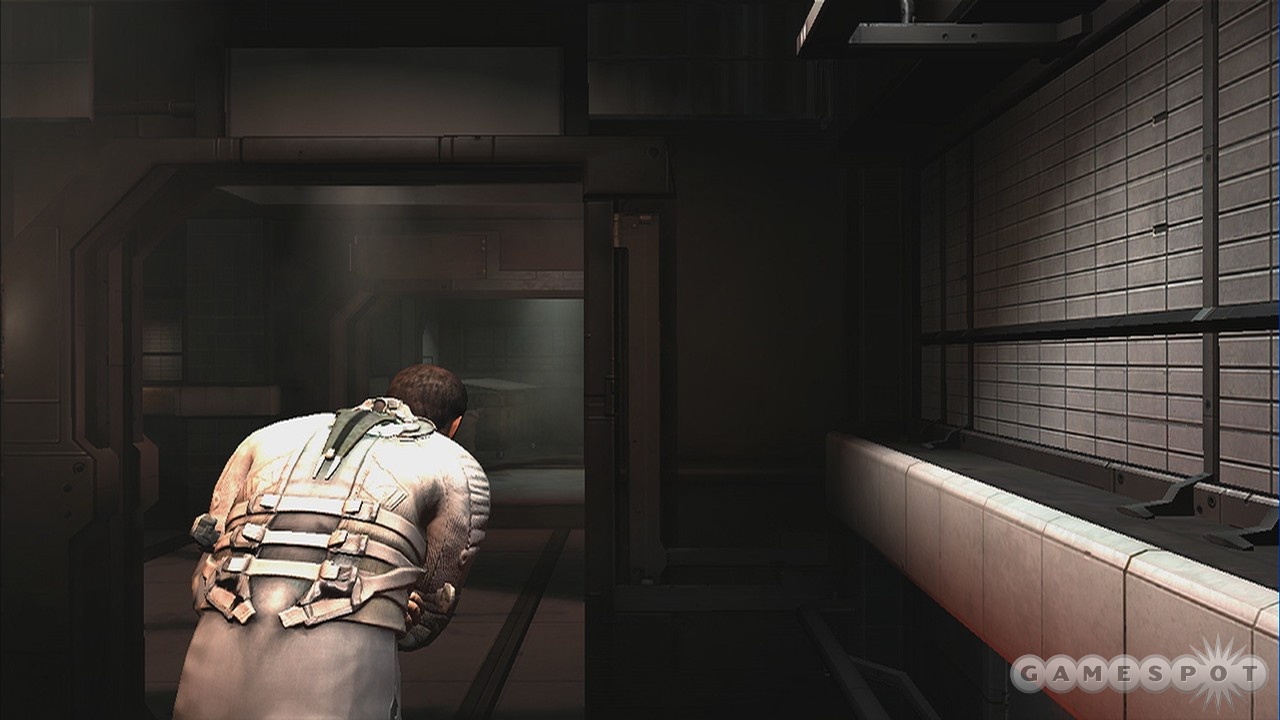
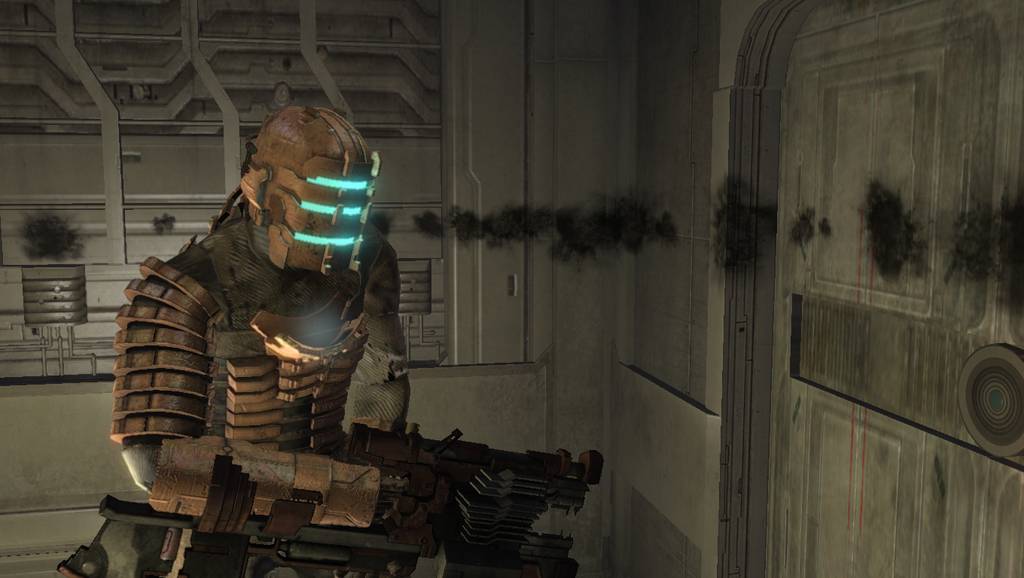
GRAPHICS: Personally, I don't see too much improvement between this game and the original Dead Space in general. Most of the improvements are just sharper and more detailed character models. For example, you can now clearly see from a distance if the enemy coming at you is wearing armor. Another example I noticed was the “weak” points on the larger enemies look more organic this time, which is nice. Something else that is done better is the lighting effects. Flashlights, lasers, high-powered light beams…these all are rendered nicely and add quite a bit to the atmosphere of the game.

SOUND: The most notable difference is that the main protagonist, Isaac Clark, is no longer a silent protagonist. Interestingly enough, the voice is perfect for him. The voices in all characters are done very well as well as the ambient screams and howls you will be hearing through-out the game. General “space” sound effects are perfect as well, very realistic especially when Isaac goes into the vacuum. There are plenty of times when you will hear your enemies before you see them, and what is great is that there are some you won't here until they are right behind you.

CONTROLS: Veterans of the first Dead Space will be able to jump right in. Fans of Resident Evil 4 and 5 should also feel right at home. Newcomers may or may not fit right in. The controls themselves are easy enough, they are basic 3rd Person/”Over-the-Shoulder” controls. The problem is that you are immediately thrust into a quick thinking situation at the beginning of the game, although its mostly just walking and running. The camera also works the same way, the mouse, as most 3rd person games. Once you acquire Telekinesis and Stasis, you will be prompted on how to use it, which is the same as the previous game.
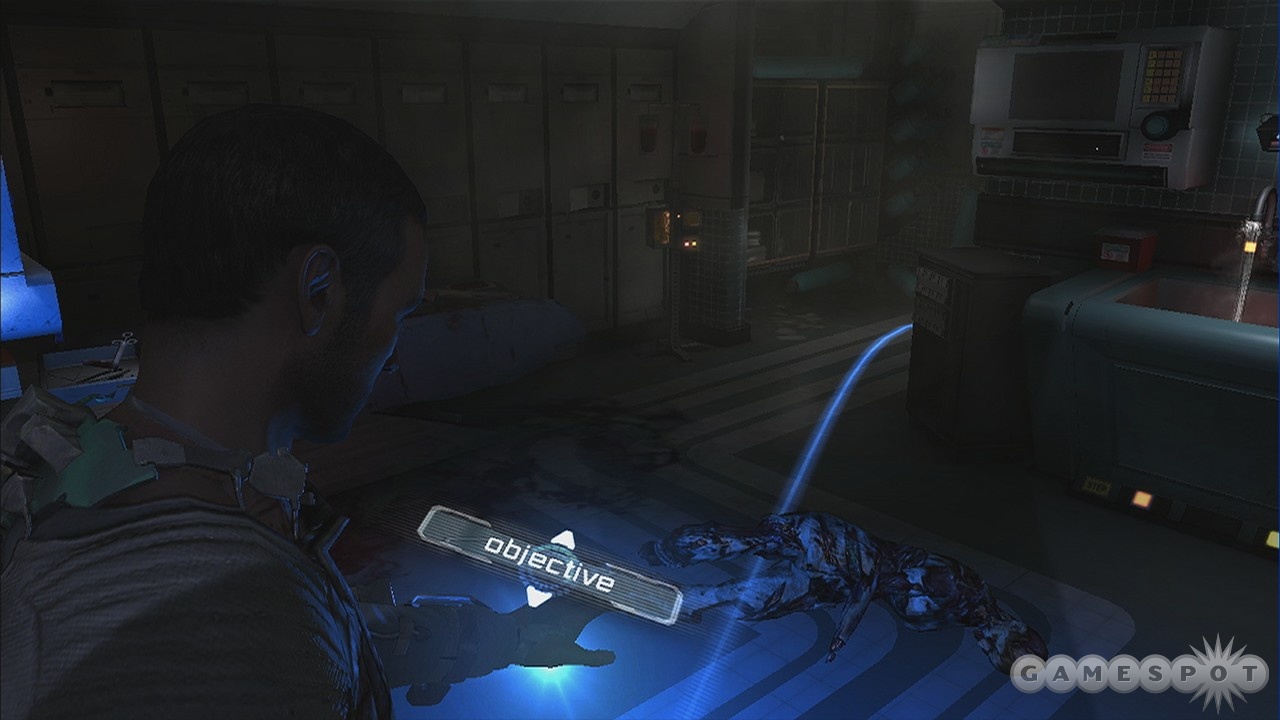
All movements are very responsive: the aiming, the running, the shooting, and the reloading. That is good, as you are often put into situations where you will need to be aware of the full 360 degree environment and have to make adjustments. It should also be noted, that when you bring up the inventory, the game is NOT paused. Guns can be switched real-time as well, although you can only carry 4 at a time. One final thing that is new from the first game: you have to actually “hack” into the electronic circuitry. You will see a gears symbol on these places, and you use the mouse to match up the cursor to the “sweet spot” which is indicated by turning blue. This is normally done to open doors.
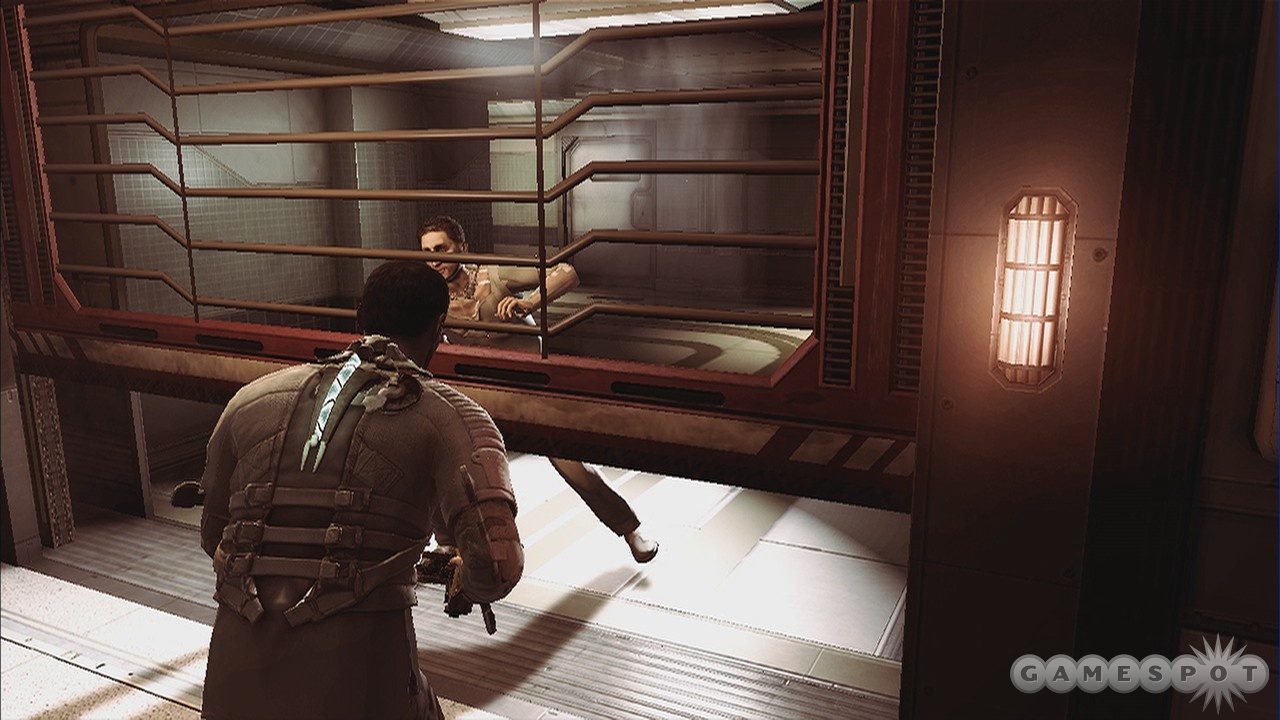
GAMEPLAY: When the game was announced, there was a lot of attention given to a developer commenting that the “pace” of the game was going to be slower than the first. A lot of people got extremely scared during the first 5 minutes of the first game, which was extremely intense. Then all the “hardcore” people came out of the woodwork and started complaining that once again, a great game will be turned more “casual” and ruin the experience. Let me start off by saying that, while Dead Space 2 is certainly less scary than its predecessor, it is FAR from a casual game. This game still falls under the category of Survival Horror no matter how you slice it. Despite the fact that there were not any parts of the game that were as “intense” as the first part of the first game, I was on the edge of my seat for the majority of the game.

Dead Space 2, for the most part, plays just like the first Dead Space. You need to survive attacks from “Necromorphs” which are basically dead humans re-animated with tentacle-like appendages. Just like in the first game, you need to concentrate on shooting off the appendages rather than shooting at the main body mass. Most of your “old friends” from the first game will return, along with a few new ones. The most obvious new creatures are the smaller and younger looking “kids” and there are even infants that will attack! There are not any “bosses” per say, just a few larger creatures that are more like mini-bosses.

The guns in this game are also mostly the same but with some additional ones. You have access to a flame thrower as well as a type of machine gun among others. As with the first game, its probably a better idea to pick 4 or 5 guns and stick with them rather than try to get all of them. Each gun requires a slightly different strategy to master and is good in different situations. A good example is the Line gun, which can shoot a wide horizontal energy beam that will cut through enemies and keep going through them. This is perfect for when you have multiple enemies coming at you. For the very small enemies you might be better off with one of the machine gun types so as the enemies are easier to kill and amount isn't as rare as the other guns. 

It also depends on you playing style, as there are plenty of people who play the whole game with JUST the Plasma Cutter which is the only “gun” given to you. And, of course, there is Telekinesis which allows you to pick up sharp objects, and dead body parts, to shoot them across the room with enough energy to damage your attackers. Harder difficulty levels will require you to master this as enemies are tougher and ammo becomes scarce.

There are a total of 15 chapters in the game. Playing on casual and taking my time, it clocked just over 10 hours. There is a New Game+ feature that lets you start a new game with all the equipment you had from your previous play through. I was able to play through Normal mode rather quickly as I had so much ammo from my causal run, I was able to complete a second run in 8 hours. The only mode that you can't access items from a previous play through is Hardcore mode. Hardcore mode also only lets you save 3 times and there are no “checkpoints”. So, while the story mode will take about 9 to 10 hours to be once, you can challenge yourself by going for the Hardcore mode. There is also multi-player, however, I did not play it so I cannot comment. 

It should also be noted that you need to create an EA account and sign in to play the game. It doesn't say that a persistence internet connection is required, although it is worth noting that I had one the whole time. The bright side is that you don't need to game disc to play. There is an option to de-register the PC you installed the game on, which is good so you don't get treated like a pirate for wanting to play the game on your new PC in a year or two.
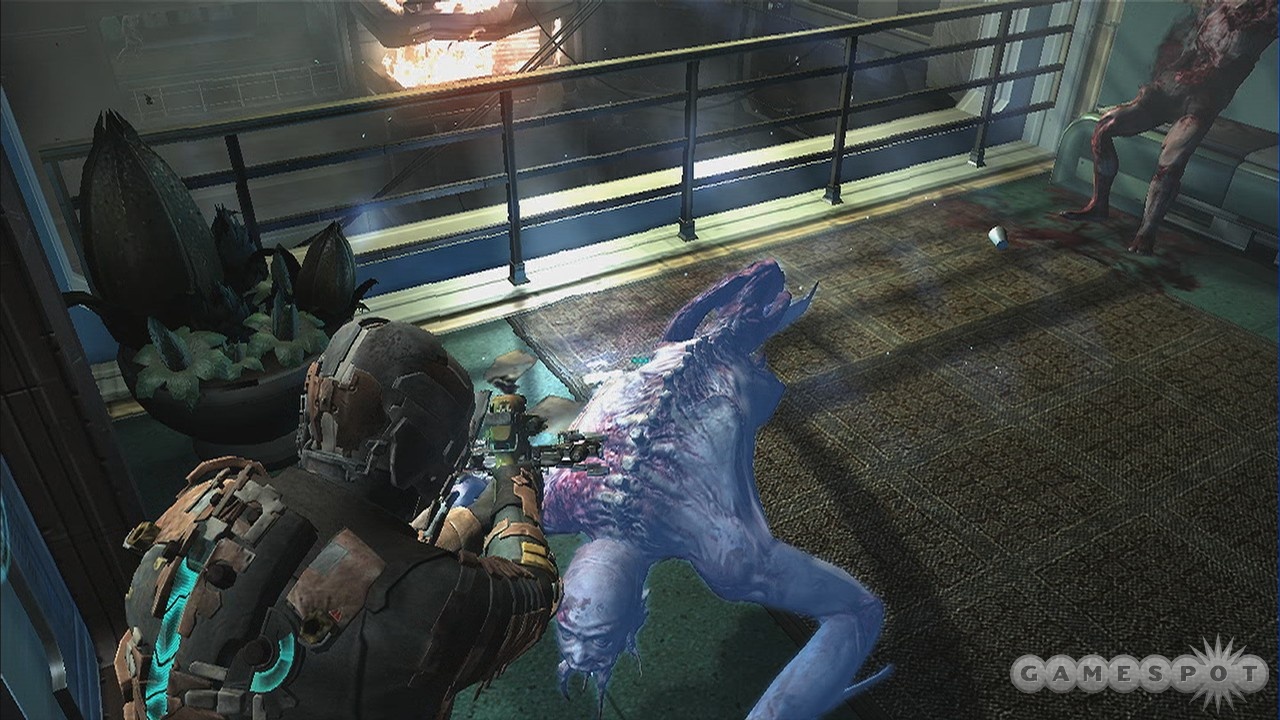
STORY: The story takes place 3 years after the end of the first game. Isaac is on a Metropolis-like space station that is built on what is left of Titan, the moon of Saturn. Not much is revealed at first on what happened during those 3 years, except that you have been kept under observation. Apparently the “marker” from the first game left its…well…mark on Isaac. He is starting to degrade mentally. You start by being released from the mental ward but you are immediately thrown into danger. The nightmare that happened 3 years ago is happening again….and this time it's not just contained on a ship, it is destroying a whole city. You are contacted buy someone who is claiming to lead you to safety, then you run into another mental patient who tells you a contradicting story, and a security office who was left to die. All of you are trying to survive not only from the Necro's, but from the government officials who are trying to silence you. Isaac's ultimate goal is to destroy the new Marker that is on the space station. As the game progresses, you witness Isaac start to degrade some more, wondering if he will ever be 100% again.
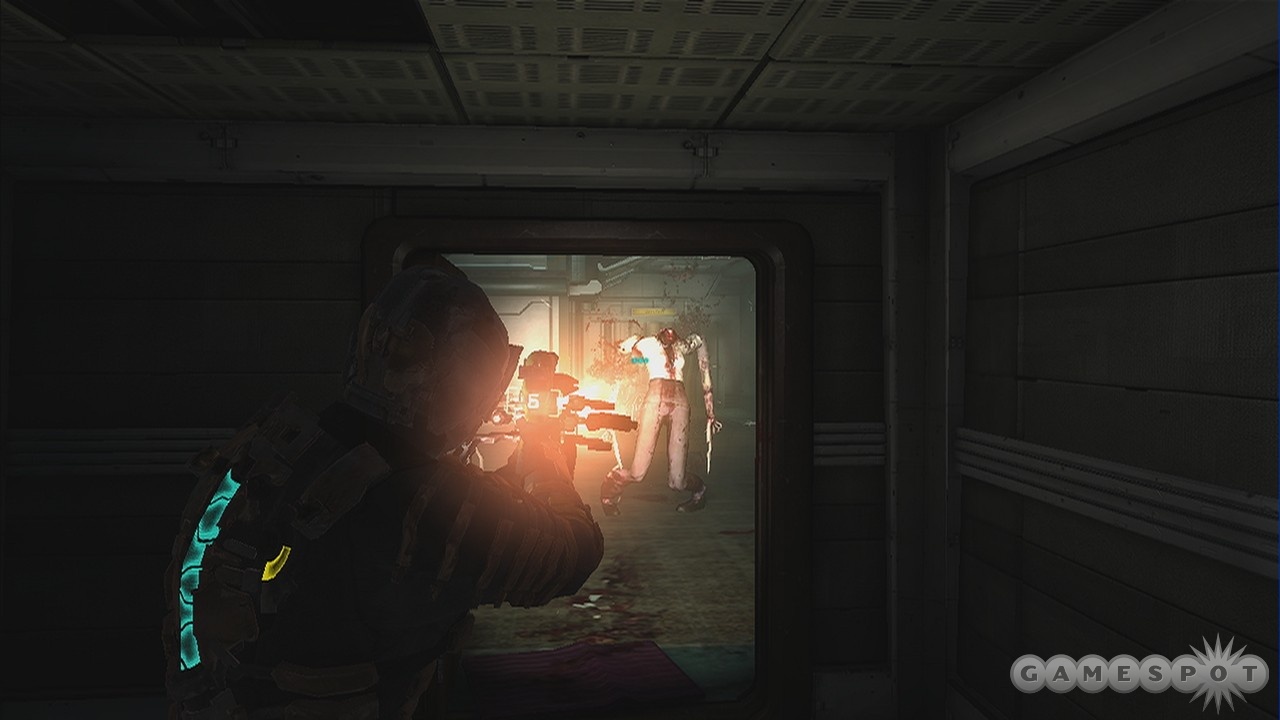
Really, the only complaint I can really find with this game is that it is “more of Dead Space”. Although, there are certainly plenty of improvements added to the game. There are not as many “Mr. Fixit” missions as there were before, although you will still need to fix things now and again. The story has evolved to where it is much bigger than an engineer on a ship trying to survive, as was the case with the first game. The developers do make it easy for newcomers to pick the game up, as there is a video you can watch that sums up all the events of the first game. Not to mention its not as scary, unless you play on Hardcore mode. Some better “boss” battles would have been nice, but again, these are some minor complaints.

Fans of both the first Dead Space as well as Resident Evil should love this game. The games pacing and fairly easy learning curve make it an easy game to pick up if you just want to try it out as well. I must also mention that the PC version has dropped in price; this is most likely due to EA stating they will not be supporting the DLC for the PC, which is a shot in the face for PC Gaming. However, the lower price combined with the fact that I personally have yet to purchase or play ANY DLC more than makes up for it.


NAME: DEAD SPACE 2
SYSTEM: PC, Play Station 3, XBOX 360

Dead Space

Headshots won't help you here.
Review By DC47
So I was bored one fine day and felt like playing a sci-fi shooter, and this game blipped on my radar. At only $20 on Steam it was a steal, so I figured why not. A few of my friends had played it and said it was good so I took their word for it and gave it a try. Upon startup, I noticed that my mouse was lagging slightly, not in movement, but in time from when I moved it in my hand to when it moved on screen. This was mostly remedied by turning off v-sync (the game's native framerate is only 30FPS) which made my screen tear slightly, but the game was unplayable with the mouse lag. I can't deduct points for this because everyone's computer is different, but it's something to be aware of. Long story short, I found a program to use my PS3 controller to play the game with, so my mouse problems were gone.

The first thing you notice when playing this game, after the intro scene, is that when you fight the first enemy necromorph (more or less a zombie, similar to the flood from Halo) and you shoot it in the head, it's head simply falls off and it continues walking toward you. This game employs a mechanic called "strategic dismemberment" by the game. What that means is that the enemies take virtually no damage from body and head shots alone, and instead you need to shoot off their individual limbs to halt their pursuit of you. Generally you shoot off their legs first which makes them drag themselves toward you with their arms, then you can finish them off by shooting off heir arms or sometimes even their head. I think this mechanic is very original and it is a nice change of pace from traditional head and body shots, and makes from some intense battles. Some enemies even feign death, jumping back up to attack you when you think you've finished them.

The other (kind of) original mechanics that the game uses are the kinesis and stasis modules, and vacuum/zero-G environments. Kinesis does what it says, it lets you fire a ball of distorted gravity at an object in the game so that you can pick it up, walk around with it, or throw it at something. This is useful for grabbing items that are otherwise out of reach, or for throwing items in the environment at enemies to conserve ammo. The stasis module gives you a "freeze ray" that you can fire at enemies or environmental hazards. It does not freeze things completely, but rather slows them down a great deal. This can allow you to deal with a group of enemies more easily, or to get through something like a mechanical door that rapidly opens and closes. 

Taking place on a forsaken spaceship, the game has some places which are vacuums (no air to breathe) so the player must make it through these areas using the air supplied by their armor suit. If that air runs out, obviously the player dies. Sometimes combined with vacuum areas or sometimes on their own are zero-G areas. In these areas the player can jump mostly anywhere in the room where there is a solid surface, be it the ceiling or the wall. Most of the puzzles of the game take place in zero-G environments which can sometimes be a pain but it's usually very fun to jump around and do whatever you want.

This game also had RPG elements, which I love in shooting games. Ammo and currency (credits) are obtained either from looting a dead enemy's corpse, or in various containers throughout the game. You can use your credits at the store to buy anything from new guns and ammo to health packs and air tanks. Naturally the store begins with only a few items stocked, the player must find "schematics" and bring them back to the store to buy the item listed on the schematic. Schematics will let you unlock new guns and new suit upgrades, as well as let you buy ammo for a certain gun that was not previously available.

Another unique thing about this game is that it is not always a shooter. What I mean is that you toggle between walking mode and aiming mode. I walking mode you can turn the camera around your character more quickly, and you can punch and stomp objects to break them and take what is inside. In aim mode, your character draws his gun and you can shoot enemies. The game does not use traditional crosshairs, rather your crosshair is a laser projected from each gun that shows where your round will fire. It may sound a little strange, but it works with the game very well.

So that was all the stuff I thought was fun and original about the game and what made it fun to play. I could only find a few minor things wrong with this game, other than that it's more or less perfect. One thing that I found which is very much personal opinion is that the horror level in the game (it IS a survival/horror game after all) was surprisingly low. The game is scary for about the first 20 minutes. After that, you are familiar with the sounds and whatnot that the game uses to try to make you paranoid and you learn to ignore them. 

The game doesn't really go for the stereotypical BOO kind of scare that other games use, instead it tries to build suspense and paranoia with strange sounds and lights. It's effective for a game like this, but personally it didn't have me wetting my pants. Obviously this might not be the case for everyone, some people might think this is the most scary game ever. I'm just saying that it didn't quite do it for me.

One of my main two complaints with this game, is that like with most other games today for whatever reason, the game can be repetitive. 99% of the game save the very last mission takes place on a space ship. That means the environment always looks the same and it can get very boring. Every hallway looks like every other hallway and every door and ceiling and floor looks the same. It's just something that annoys me when games like Metroid Prime exist which I still think has the best environments out of any game to this day. The environment isn't the only thing that is repetitive, or this argument would be pretty weak. The main repetition comes when you realize that there are only about 8 guns in the entire game, and only 4 of them are actually good. 

So you play the game with the same 4 guns (or 3 if you want more ammo and don't care about the 4th). This game took me about 25 hours to complete, and you get all the guns at about the 10 hour mark so after that nothing really changes. On top of that, there aren't many different kinds of enemies in this game. You can tell the developers were aware of this because it pulls a Final Fantasy and colors some of the standard enemies with a black palette and gives them more HP and passes them off as new enemies. All of the enemies in this game I thought were very original, but once you get over the "wow I've never seen this in a game before" phase, you begin to realize that there aren't that many enemies. You can even start to predict by the end of the game when each type of enemy will appear because the game likes to package a certain enemy with a certain event (for example the two-armed necromorph generally appears in zero-G environments and the basic necromorph generally appears when the lights go out or during a quarantine). 

The bosses on the other hand, which I squealed with joy at seeing because I love bosses in shooters, are gigantic and awesome, but sadly you defeat them all in the same way. Without giving too much away, basically each boss has a few tentacles that you have to shoot until they explode and then you win. The bosses obviously has different attacks and you fight them in different environments and circumstances, but to have every boss in the game have tentacles was a little saddening.

My other main complaint with this game is the controls. Generally they are very good, but since you spend most of the game in aim mode to watch out for surprise attacks and whatnot, your aim mode finger gets really tired holding down the trigger (on PS3 and 360 controllers) and the right mouse button (on the mouse, obviously). I did tend to play this game for several hours at a time, but keeping your finger on a spring-loaded trigger for an extended period of time isn't fun. Not to mention during intense fights and boss fights you squeeze that thing with all your might because the adrenaline starts flowing. 

The zero-G controls are also very annoying because every time you jump to a new surface, your character stands up and points the gun straight down. This is especially annoying when you are being assaulted by enemies and don't really have time to be aiming straight down, especially when you're trying to target a limb and not a body. This aiming can also serve to disorient you in zero-G areas because as I said before, everything looks very similar. You might see something on the other side of the room and jump to it, then lose sight of it completely because you're facing a totally different way than you thought you were.

Despite those flaws that might not even bother other people, this game holds up very well. The repetitiveness is somewhat offset by having a solid plot, so it's not a total drag for the entire game. The voice acting is very good and you make a connection with the characters. As much as it pains me to say it in a review, the game also has very pretty graphics (assuming your PC can display them at max settings) and the enemies are very detailed and fun to look at, especially the bosses. Thought I haven't played through on hard mode, normal mode is a tad easy, even for someone like me who can't aim in a shooter game with a controller to save his life. In harder difficulties the game drops less ammo and the enemies have more HP making survival and ammo/money management a higher priority, contrary to offense being the main priority in the lower difficulties.

Overall I really enjoyed this game and it almost instantly earned my seal of approval. Despite my innate hatred to modern games, this one exceeded the mark and was very enjoyable. Not perfect due to slightly annoying controls and repetitiveness, but well worth my time.


NAME: DEAD SPACE
SYSTEM: PC, Play Station 3, XBOX 360

Friday, February 24, 2012

Kingdom Hearts - Birth by Sleep

An unbelievable game, and for me, the best in the Kingdom Hearts Series!

The story revolves around three keyblade wielders; Terra, Aqua, and Ventus. Terra and Aqua undertake the Mark of Mastery exam at the beginning of the game, a test which determines if an individual is deserving of the title of Keyblade Master. Aqua passes, but Terra briefly lets his darkness get the better of him, causing Master Eraqus to fail him. Shortly after the exam Master Eraqus gets a message from Yen Sid that creatures known as the Unversed are wrecking havoc. 

He sends Terra and Aqua out to destroy them, giving Aqua the additional task of watching Terra and making sure he keeps his darkness in check. Ventus decides to follow Terra, and Aqua chases after him, thus beginning the adventure. While the main plot revolves around the three keyblade wielders and their quest to vanquish the Unversed and unravel the mysteries surrounding them, there are also other stories for each world, based on classic Disney tales.

The various worlds, from Sleeping Beauty to Peter Pan, all consist of three parts. Terra, Aqua, and Ventus each have their own story, and they all visit each of the worlds once. You might play as Terra and begin a story, only to end it with Aqua, or to continue with Ventus only to see the very beginning later on with Aqua. This works very well, and doesn't feel tedious. The stories are well done and despite the main plot making the lesser plots feel insignificant at times, they generally blend well together. Also, each character's story has a different difficulty level: Terra's is the easiest, Ventus' is next, and Aqua's is the hardest.

GAMEPLAY: The gameplay in Kingdom Hearts: Birth by Sleep is fantastic. There's much less exploration than in previous Kingdom Hearts, focusing more on battling enemies. The combat system is much improved, with a system somewhat similar to that which was found in Chain of Memories, though better by a long shot. You'll be able to scroll through a deck of commands, ranging from powerful melee attacks to magic attacks such as fireballs and magnets that suck up enemies. Better yet, you can meld together attacks to form more powerful attacks, and by attaching crystals you can add abilities that boost HP, allow you to string together longer combos, and more. Each character has attacks unique to them, some of them powerful enough to wipe out whole groups of enemies.

While the deck system greatly adds to the game, it's still quite fun without it. You could go through the entire game using only the normal attack button. (Though you'd probably die a lot unless you chose the Easy difficulty) Mashing the attack button has never been so fun. You can chain together huge combos, switching from one enemy to another, until they've all been defeated. But mixing it up is what's the most fun. Battle off hoards of enemies with well timed dodges and blocks, ultimately countering and dealing a great deal of damage to them before using your most powerful attack and annihilating them all. Success! Critical Mode plus the ability Zero EXP is the ultimate experience, forcing you to constantly guard and meld abilities to prosper. While playing with Zero EXP gets extremely difficult and time consuming later on due to your low strength, it is a lot of fun through the first three worlds. You have to rely a lot on command styles, similar to the forms in Kingdom Hearts II.  

There are various command styles in the game, each one triggered by using certain types of attacks. One may be triggered by Blizzard attacks, the other by guarding repeatedly. Once you change styles you become more powerful and eventually unleash an all-powerful finishing command. There are different levels of command styles, and while you always start with a level one command style, by fulfilling certain conditions you can change to a higher level command style, which is even more powerful.

Something I always enjoyed in previous Kingdom Hearts was the Olympus Colosseum. While it's been dumbed down in this game, there's a replacement called the Mirage Arena. Inside you can battle enemies, play on the Command Board, or do a racing mini-game. Each time you play one of the games you earn medals, which can be spent on some items ranging from Group Cure (For multi-player, as you can play with friends in Mirage Arena) to each of the melding crystals. You also can gain levels, whether by beating one of the games, or by getting a certain amount of medals. The higher the level, the more matches you unlock in the fighting section of the arena.

The battle section of the arena is at times even more fun than the rest of the game. In each match you'll battle hoards of enemies, before finally battling a boss. You'll encounter bosses you've fought previously in the story, and also a few exclusive to Mirage Arena. While not as hard as the secret bosses, the Arena-exclusive bosses can be quite difficult, especially the latter ones.

The Command Board is a Monopoly-like game where you put down different abilities on the game board in order to level them up. There is a certain number of points you need to win; you get these points by passing one of the four colored checkpoints, landing on a special space, having an opponent land on one of your spaces, or by passing start after touching all four checkpoints. It's very fun, though it doesn't play that much like Monopoly in the fact that you'll mostly just racking up points by going around the board, and you don't actually want your opponent to land on your spaces, because they can take over them, causing you to lose the ability. (This only happens when you select Command Board on the World Map, you're safe inside the arena, though you can't gain any abilities either)

Racing is one of the several mini-games besides the Command Board. It plays like a mediocre Mario Kart, though it can still be fun. The other games, a rhythm-based game, and a volleyball-like game aren't much better, but are still enjoyable. Overall, Kingdom Hearts: Birth By Sleep has one of the fastest-paced and most satisfying battle systems of any game I've played. I've replayed the game several times (And I mostly only go through games once) and I'm still having a blast. 

SOUND: The music in this game is amazing as well. There are quite a few excellent pieces, namely the battle themes and the character themes. The Disney themes, while not as impressive, are still catchy and fun to listen to. "Simple and Clean" returns as the theme song, but even after being re-used several times I still enjoy listening to it.

GRAPHICS: Absolutely incredible. I have never played a game with graphics as good as these. The cutscenes are amazing, and so are the in-game visuals. The FMV sequences totally blew me away as well. 

OVERALL: The best Kingdom Hearts to date, Birth by Sleep is one of the best video games period. Even if you aren't a fan of the series, GET THIS GAME, you won't regret it.


NAME: KINGDOM HEARTS - BIRTH BY SLEEP
SYSTEM: PlayStation Portable

Sega Dreamcast

This Console is Going to the Grave With Me... I'm Serious.
Review By Claud
 
1998 was a mystical year: The Yankees won their record 24th World Series (those damn Yankees), Microsoft released the brand new Windows 98, and the Sega Dreamcast was released on the market. The Dreamcast introduced many innovations into the Video Game world, and most were great. We were thrust into the sixth gaming generation (aka the 128 bit generation), and though the Dreamcast suffered many highs and lows it eventually succumbed to the Sony hype machine. The Dreamcast had a very nice design, both inside and out.

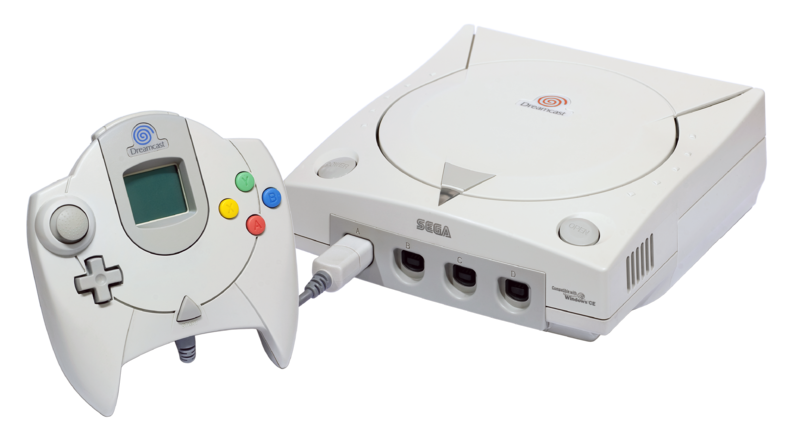
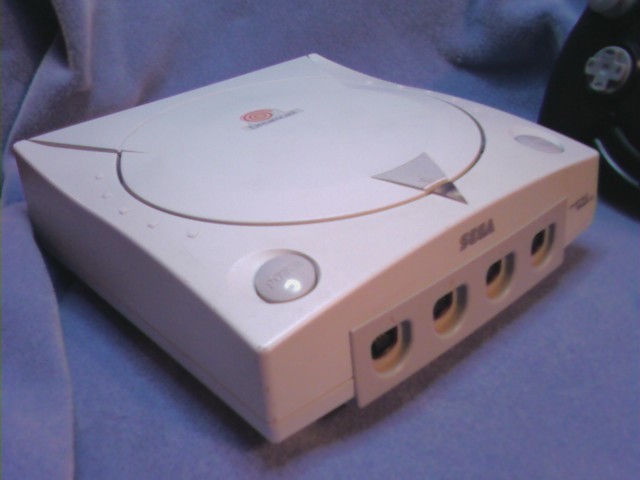
DESIGN: Aesthetically, the Dreamcast is one of the more pleasing consoles, and it was Sega's second white console (the first being the SG-1000). Along with its white shell, came four controller ports (which is now the norm), and a 56K modem, included in the back. Hardware-wise, the Dreamcast was incredibly powerful then, and it is fairly powerful now. It has two 32-bit processors running at 200MHZ, and a 12x GD-ROM drive with custom 1GB capacity. All of this packed into a neat little two kilogram shell. Not only does the outside and inside of a Dreamcast look good, the result on screen is just as good.

GRAPHICS: The Dreamcast has exceptional graphics, and is arguably the second best of the sixth generation consoles graphically (with the PS2 being the worst, the Dreamcast being around even with the Gamecube, and the Xbox being the best). The Dreamcast has five different methods of input/output, with the poorer ones being RF, and A/V, and the better ones being RGB Scart, S-Video and VGA. 

That is another area worthy of mention, that the Dreamcast was one of the two consoles of the four in the sixth generation to support VGA. Some games on VGA look as good as some games on Xbox 360, for example: Soul Calibur, Rez, Shenmue, and more. Even the poorer graphical games on the Dreamcast look as good or better than average to poor PS2 games. The graphics on the Dreamcast are spot on, as are the sounds.

SOUND: The Dreamcast has some of the best sound of any console, be it sixth generation, seventh generation, or any generation. It has a separate CPU for sound, thus the system can focus only on sound, while it has the two other CPUs running on the game. Sound though really has not been a weak point in consoles since the fourth generation anyway. Bottom line; the Dreamcast does sound very well. Just as they did with the next element, only this time, there was innovation.

CONTROLLERS: Sega's Dreamcast controller was an innovative controller, and was also a great controller. You have your standard four buttons on the right (A, B, X, Y), an analog stick and the d-pad on the left, and an L and R trigger on the left and right side respectively. There were also two slots at the top of the controller with a window in the centre. In the slots, you could place certain accessories that could be used in-game, accessories such as the rumble pack, the VMU (more on this later), etc. The one beef that exists (though I do not have a beef with it) is the chord. 

Unlike other controllers, the chord on the Dreamcast controller came out of the bottom, and many gamers found the chord positioning to be a nuisance, even though you could make it so that the chord really went out from the top (two small clips on the back of the controller). As for the rest of the accessories, there is even more innovation.

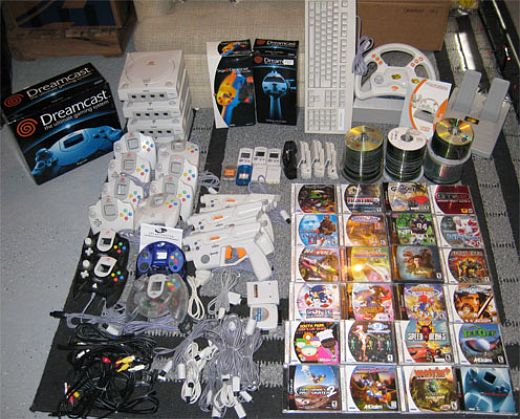
ACCESSORIES: One of the highlights of the Dreamcast is its many different peripherals and accessories. The most important, and innovative one is the VMU. The VMU was not your ordinary memory card; it can save your games, and you can play mini games on it. 

Also during game play, you can look at the VMU and see certain vital statistics, such as health and ammo. There is also the standard memory card (and its many third party clones), the 4X memory card (and its third party clones), the rumble pack (and its MANY third party clones), and the microphone (used solely for three games, namely Seaman). 

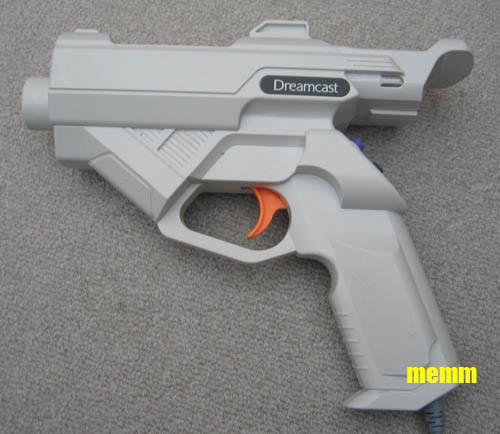
For the peripherals, you have the fishing rod controller (which uses the same motion technology as the Wii, and this was in 1998!), the DDR dance mat (used solely for DDR), the Samba de Amigo maracas and Cha Chas (used solely for Samba de Amigo), the karaoke add-on (released only in Japan), the light gun (released only in Japan due to many gun-related deaths in North America), the arcade stick, the twin sticks (used solely for Virtual On), the Dreameye (released only in Japan), and the keyboard and mouse. Speaking of the keyboard and mouse...

ONLINE: (I know that a section for online may be dubious, however online was a major factor for the 6th Generation). The Dreamcast was the first (and only) fully online console, and the first to be online out of the box. Also, and more importantly, it is the only console to have full online capabilities (surfing, gaming, instant messaging, etc.). 

The keyboard and mouse were released to make the online experience easier and more efficient, and at 56K through your ISP, not too much was more efficient in 1999 than what is efficient now. Sega also released a broadband adapter for cable/dsl connections, and that is typically a lot faster than a modem, however very few were made and as a result, today it is rare and sells for a hefty buck. More than anything though, a console can be deemed good or bad by its gaming titles. Another area the Dreamcast is a slam dunk.

GAME TITLES: Granted the Dreamcast may not have as many titles as the PS2, however the amount of good titles is good enough. Aside from RPGs (and even those are good, solid games), every genre is well represented on the Dreamcast, with the fighting and shooting genres being the most prolific. Some of the more popular games are Soul Calibur, Sonic Adventure, and Shenmue. 

The Dreamcast is also home to many exclusives that are fine games, including the three mentioned above. One problem for game titles was the lack of third party support (namely Electronic Arts). With EA backing out of making software for the Dreamcast, Sega developed their own sports titles, with many being better than the current crop of EA titles (this can be seen mainly between the NFL 2K franchise, and the Madden Franchise). Guess EA really blew that one...

GET or NOT: Even though it is 2007, and there are no more games being made in North America or Europe, the Dreamcast is still a great buy for the casual gamer, or the non casual gamer (not to mention that it is very easy and cheap to buy).  When Sega announced that they would stop support for the Dreamcast, it showed just how dangerous hype is. 

Losing out to the over-hyped PS2 was Sega's nail in the coffin, and had the Dreamcast been as successful as the PS2, Sega may still be making consoles. The dream died in 2001, but with games still being made in Japan, and people still flocking to their Dreamcasts to get in one more game of Soul Calibur or Shenmue 2, is the console really dead? Not in my book...